
Why Healthy Habits Fail — And How to Make Them Actually Stick
You can have the best wellness plan in the world.
The perfect supplements.
The cleanest grocery list.
The beautifully typed-up protocol.
The color-coded intentions.
But if the plan does not fit into your actual life, it will end up in the same place as every other “I’m really going to start Monday” plan.
Forgotten.
Half-started.
Buried under laundry.
Possibly next to a water bottle you meant to drink three days ago.
And this is exactly why working with clients at C&C Holistic Living is not just about giving nutrition tips, functional lab insights, supplement recommendations, or root-cause education.
It is about helping women build long-lasting habits that actually work in real life.
Because getting back to feeling good is not only about knowing what to do.
It is about making the right things easier to do consistently.
Why Most Healthy Habits Do Not Stick
Most women do not fail because they are lazy.
They fail because the habit was not set up well.
Think about it. How many times have you said:
“I need to drink more water.”
“I need to remember my supplements.”
“I need to eat more protein.”
“I need to stop skipping breakfast.”
“I need to go to bed earlier.”
“I need to meal prep.”
“I need to stop grabbing random snacks at 3pm.”
You know what you need to do.
That is usually not the problem.
The problem is that your current environment, schedule, stress level, family life, energy, and routines may not support the new habit yet.
This is where the work gets practical.
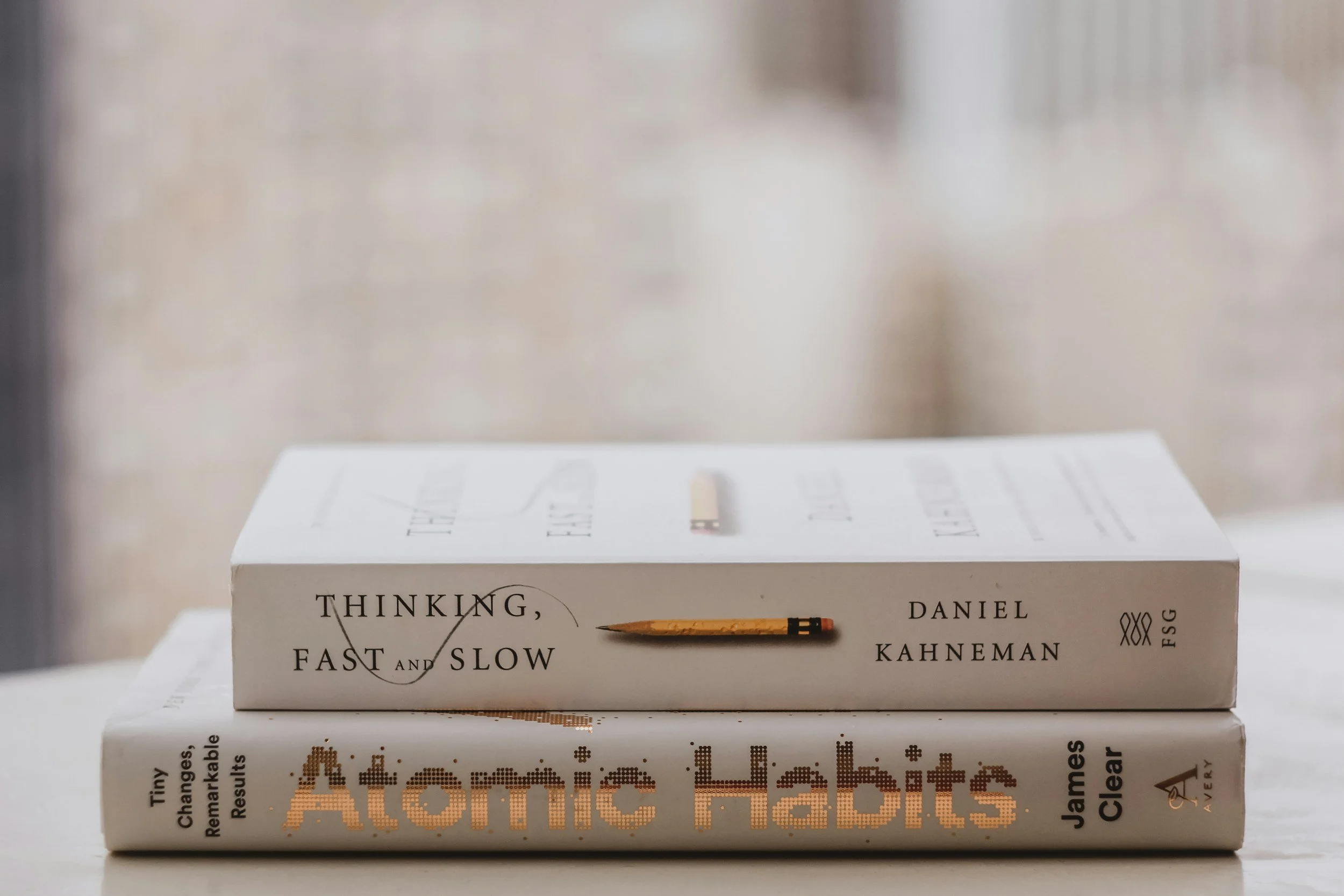
In Atomic Habits, James Clear teaches that successful habit building is not just about motivation. It is about designing systems that make good habits more obvious, attractive, easy, and satisfying.
And honestly? That applies beautifully to health.
Because a wellness plan should not feel like you are trying to win a daily obstacle course while also managing dinner, work, kids, laundry, perimenopause, cravings, poor sleep, and a nervous system that is one email away from going feral.
Make the Habit Visible
One of the simplest ways to build a habit is to make it visible.
If something is hidden in a cabinet, buried in a drawer, or tucked behind twelve bottles of random supplements from 2019, your brain is probably not going to remember it.
Out of sight really does become out of mind.
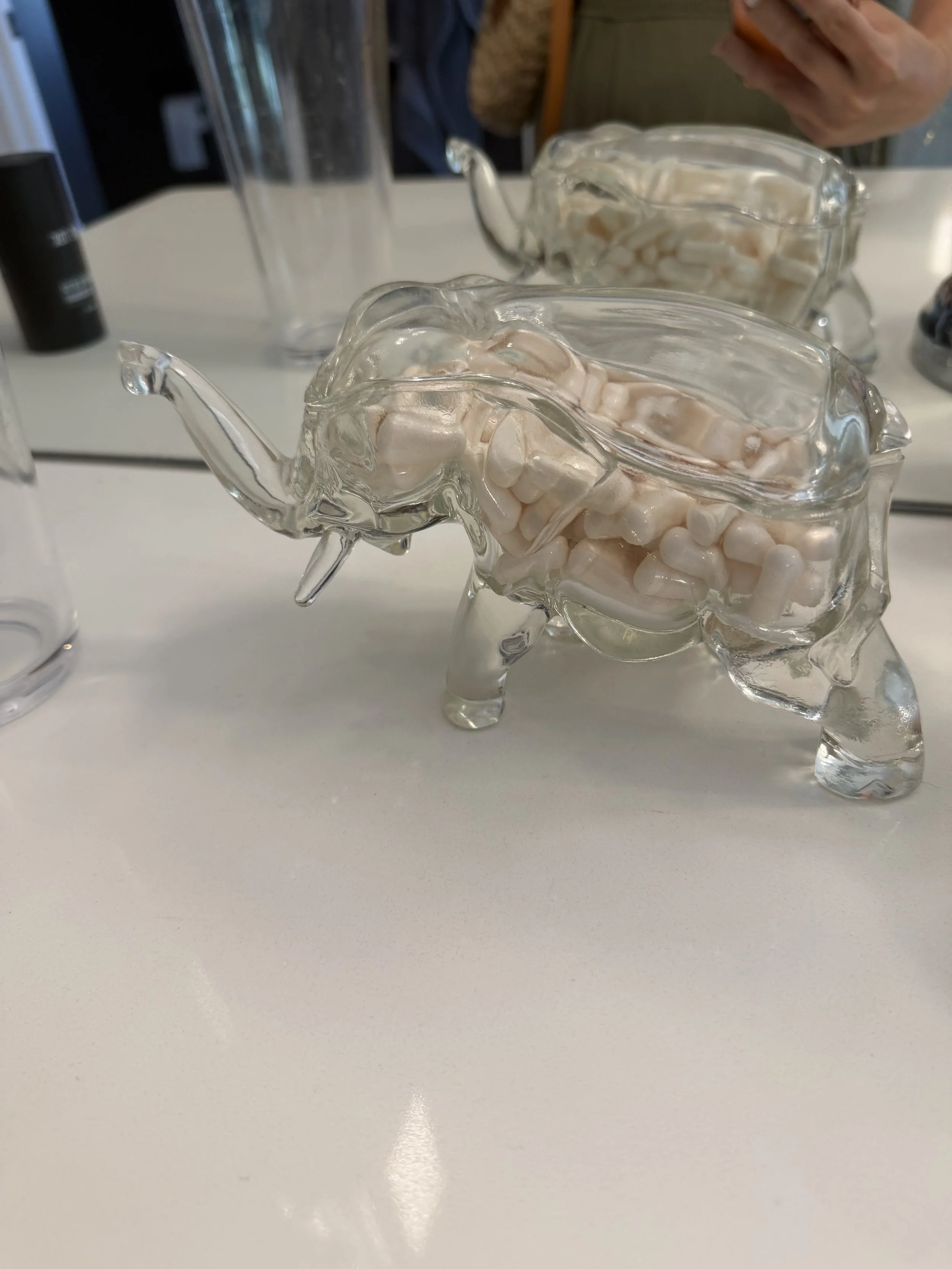
One of my Ultimate Wellness clients came up with such a simple, brilliant habit strategy. She needed to remember her nighttime vitamins, so she put them in a pretty candy jar on her counter.
Not shoved in a drawer.
Not hidden in a cabinet.
Not sitting in the bottle graveyard next to expired cough drops.
A cute candy jar.
Make it stand out
Whatever it is, the way you tell your story online can make all the difference.
Visible. Easy to see. A little fun. And now it catches her attention at the exact time she needs the reminder.
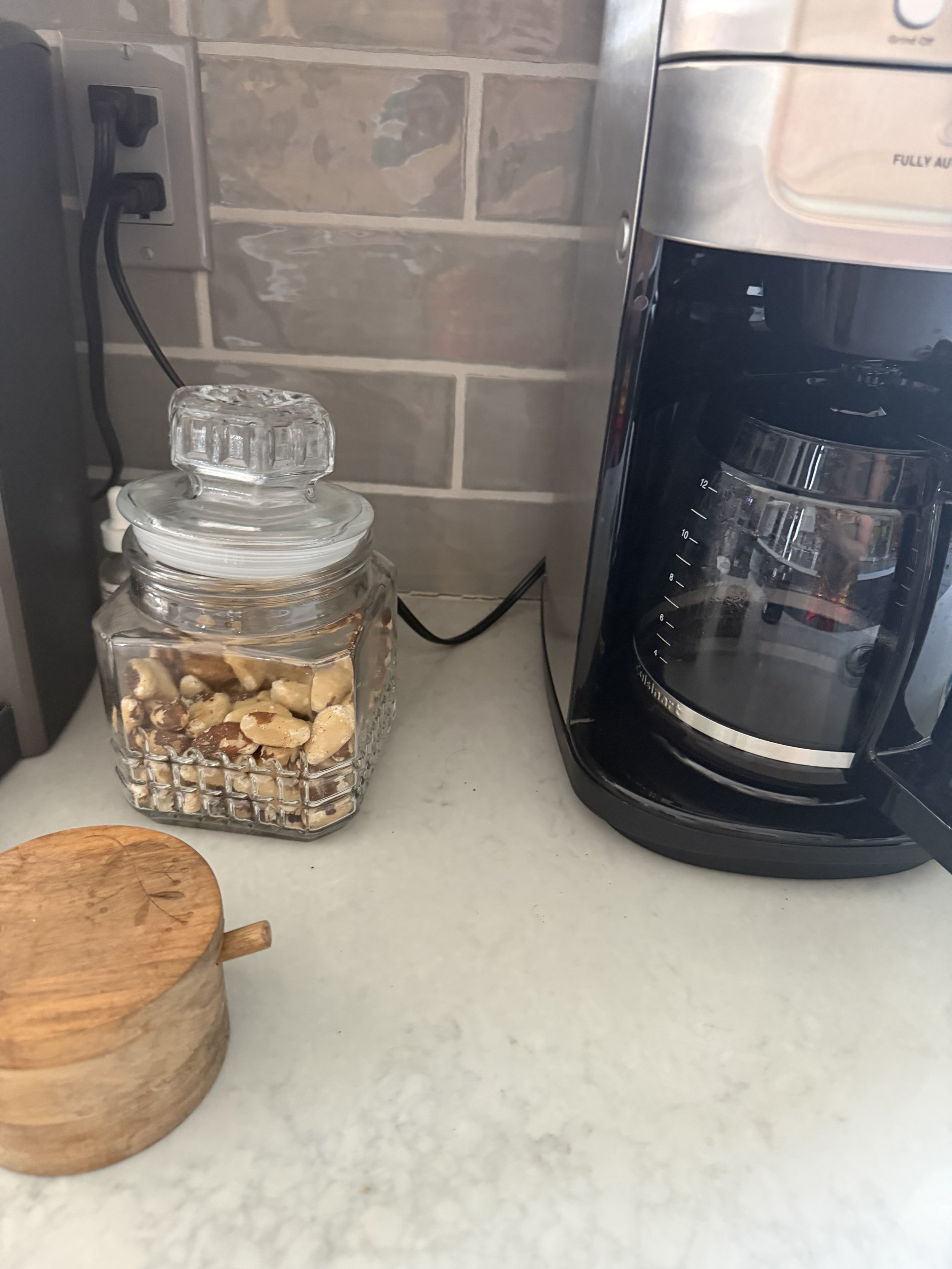
She also put her Brazil nuts next to her coffee machine in a pretty jar so she would remember to take them. Again, simple. Visible. Connected to something she already does every day: making coffee.
Make it stand out
Whatever it is, the way you tell your story online can make all the difference.
This is the kind of real-life strategy we build inside the Ultimate Wellness Package, where functional testing, nutrition, lifestyle, and accountability come together to help women stop guessing and start creating habits that actually stick.
Make the Habit Easy
A lot of people try to build habits by making them way too big.
They go from doing almost nothing to suddenly planning to drink a gallon of water, make a protein breakfast every morning, meal prep for five days, strength train four times a week, take seven supplements, meditate, journal, walk, stretch, and be emotionally regulated by Tuesday.
Cute plan. Terrible setup.
Your brain does not love sudden chaos, even when the chaos is “healthy.”
A better question is:
How can I make this so easy I almost cannot mess it up?
If you want to eat more protein at breakfast, do not start with a complicated recipe that requires 14 ingredients and emotional stamina.
Start with:
Pre-cooked sausage or meatballs
Leftovers from dinner
Hard-boiled eggs if tolerated
A protein smoothie
Greek-style yogurt or dairy-free protein option if appropriate
A breakfast bowl you can prep ahead
If you want to drink more water, do not rely on “I’ll remember.”
Put the bottle where you will trip over it.
Not literally. We are building habits, not creating injury claims.
Keep it in your car.
On your desk.
Next to your coffee.
By your bathroom sink.
Wherever your eyes already go.
If you want to take supplements consistently, pair them with something you already do.
Coffee.
Dinner.
Brushing your teeth.
Packing lunches.
Turning off the kitchen lights.
This is habit stacking, and it works because you are attaching a new habit to an existing routine.
For example, if blood sugar symptoms like cravings, energy crashes, hot flashes, poor sleep, or afternoon fatigue are part of your bigger picture, nutrition habits become even more important. You can learn more in Blood Sugar and Hot Flashes: The Connection Most Women Miss.
In plain English: stop expecting your brain to magically remember things. Give it a clue.
Make the Habit Fun or Attractive
Healthy habits do not have to feel like punishment.
This is where so many women get stuck. They think improving their health means making life boring, beige, restrictive, and joyless.
Nope.
A habit is much more likely to stick when it feels attractive, satisfying, or connected to the kind of person you want to become.
That is why the candy jar idea is so good.
Taking vitamins at night is not exactly thrilling. Nobody is throwing a party because zinc showed up.
But putting them in a cute jar? That makes it more enjoyable. It turns a boring task into something a little more visual, intentional, and fun.
Same with Brazil nuts in a pretty jar next to the coffee machine.
You are not just “taking Brazil nuts.”
You are creating a tiny ritual.
And tiny rituals matter.
Other examples:
Put electrolytes in a cute glass with a straw
Use a pretty supplement organizer
Keep protein snacks in a basket labeled “mom fuel”
Make your water bottle one you actually like carrying
Put your walking shoes by the door
Create a relaxing nighttime tea station
Play a podcast only during walks
Use a habit tracker that feels satisfying to check off
This is not shallow. It is smart.
Your environment can either work for you or against you. I vote we stop making health harder than it needs to be.
Make the Habit Fit Your Real Life
A lot of health advice fails because it assumes you live in a quiet wellness retreat with unlimited time, no children, no job, no stress, and a personal chef named Eduardo.
Most of us do not have Eduardo.
We have school drop-off, work calls, sports practices, grocery runs, client meetings, laundry piles, aging parents, picky eaters, and a dog who throws up on the rug at the least convenient time possible.
So the habit has to fit real life.
That is why I do not just tell a client, “Eat more protein.”
We talk about:
What time do you actually wake up?
Are you hungry in the morning?
Are you rushing out the door?
What foods do you tolerate?
What does your family eat?
What can you prep ahead?
What feels realistic this week?
Where are you getting stuck?
What would make this easier?
Because “eat more protein” is advice.
But “keep pre-cooked protein options in the fridge and eat them with your coffee before school drop-off” is a strategy.
That is the difference.
For women who want foundational support with nutrition, minerals, blood sugar, digestion, and habit-building, Nourish & Thrive offers a personalized way to start making changes without feeling overwhelmed.
Why Accountability Matters
Information is everywhere.
You can ask Google, ChatGPT, Instagram, your neighbor, your chiropractor, your aunt’s Facebook group, or some guy at the gym who thinks creatine fixes everything.
The problem is not access to information.
The problem is knowing what applies to your body, your symptoms, your labs, your schedule, your stress, your digestion, your blood sugar, your hormones, and your actual life.
When symptoms like bloating, fatigue, cravings, poor sleep, food sensitivities, and weight loss resistance keep showing up,functional testing can help uncover patterns that may not show up through generic wellness advice alone.
That is where support matters.
At C&C Holistic Living, I help clients understand what their body may be asking for, but I also help them turn those recommendations into repeatable habits.
Because the transformation happens in the follow-through.
Not in the pretty PDF.
Not in the lab results alone.
Not in the supplement order.
In the daily choices that become easier, more automatic, and more aligned with the woman you are becoming.
Healthy Habits Are Built, Not Forced
If a habit is not sticking, it does not automatically mean you need more discipline.
It may mean the habit needs to be redesigned.
Ask yourself:
Is this habit visible?
Is it easy?
Is it connected to something I already do?
Is it enjoyable or satisfying in some small way?
Is it realistic for my current season of life?
Do I need support or accountability?
This is how you stop relying on motivation.
Because motivation comes and goes.
Systems keep you moving when motivation has left the building, probably carrying your good intentions with it.
Simple Habit Ideas to Try This Week
Here are a few realistic ways to make healthy habits easier.
If you forget supplements:
Put them somewhere visible and pair them with a daily routine, like coffee, dinner, or brushing your teeth. Use a pretty jar, basket, or organizer so it feels intentional instead of clinical.
If you forget to drink water:
Keep water in the places you already spend time: your car, desk, kitchen counter, and nightstand. Add minerals or electrolytes if that is part of your plan.
If you skip breakfast:
Prep protein ahead of time or choose an easy option that requires almost no thinking. Breakfast does not need to be fancy. It needs to support your blood sugar.
If you snack at night:
Look at whether you are eating enough during the day. Night cravings are often not a willpower problem. They may be a blood sugar, stress, protein, or under-fueling problem.
If you struggle with bedtime:
Create a visible cue that tells your brain the day is winding down. Dim the lights, make tea, set out pajamas, or put your phone charger outside the bedroom.
If your biggest struggle is waking in the middle of the night, you may also want to read Why Am I Waking Up at 3am Every Night in Perimenopause? to better understand the possible connection between blood sugar, cortisol, stress, late meals, alcohol, low protein, and hormone changes.
If you feel bloated no matter what you eat:
Start noticing patterns around meals, stress, bowel movements, and food reactions. Bloating is not always random. It can be connected to digestion, gut health, food sensitivities, and how well your body is breaking down and using food.
If bloating is one of the symptoms making you feel uncomfortable in your body, read Why Bloating Gets Worse in Perimenopause to better understand why digestion can shift after 40.
How C&C Holistic Living Helps Build Habits That Last
Working with C&C Holistic Living is not just about being told what to eat or what supplements to take.
It is about learning how to support your body in a way that fits your life.
That may include looking at digestion, blood sugar, sleep, stress, minerals, food sensitivities, functional lab patterns, and your daily routines. But it also includes helping you build habits that are realistic and sustainable.
Because if you are exhausted, bloated, craving sugar, waking up at 3am, gaining weight, and feeling like your body is working against you, the last thing you need is another overwhelming plan.
You need clarity.
You need strategy.
You need someone to help you connect the dots and simplify the next step.
And sometimes that next step is not dramatic.
Sometimes it is putting your supplements in a candy jar.
Sometimes it is putting Brazil nuts next to the coffee machine.
Sometimes it is eating breakfast before caffeine turns you into a tiny stressed raccoon.
Small habits matter.
And when they are repeated consistently, they can become the foundation for feeling better.
Final Thoughts
Healthy habits do not stick because you shame yourself into doing better.
They stick when they become visible, easy, enjoyable, and realistic.
If you are tired of starting over every Monday, it may not be that you need more willpower. You may need a better system and the right support.
At C&C Holistic Living, I help women uncover the root causes behind symptoms like fatigue, bloating, cravings, weight changes, poor sleep, and hormone shifts — and then turn those insights into practical habits that actually fit real life.
Because getting healthy should not feel like a second full-time job.
You already have one of those. Maybe three.
Ready to stop guessing and start building habits that support your body?
Explore the Services at C&C Holistic Living or book a free discovery call to find the level of support that best fits your goals, symptoms, and season of life.
Christa Chioini is the founder of C&C Holistic Living and a Nutritional Therapy Practitioner and Restorative Health Practitioner Level 2 specializing in root-cause nutrition for women in perimenopause and menopause. She helps women connect the dots between weight loss resistance, digestion, blood sugar, fatigue, hormones, and lifestyle patterns through personalized wellness support and functional testing.
Disclaimer: The information shared in this blog is for educational and informational purposes only and is not intended to diagnose, treat, cure, or prevent any disease. This content is not medical advice and should not replace care from your physician or qualified healthcare provider. Always consult with your healthcare provider before making changes to your diet, supplements, medications, exercise routine, or health plan, especially if you have a medical condition, are pregnant or nursing, or are taking prescription medications.
