
My GLP-1 Journey: What It Helped Me Change and What It Couldn’t Fix Alone
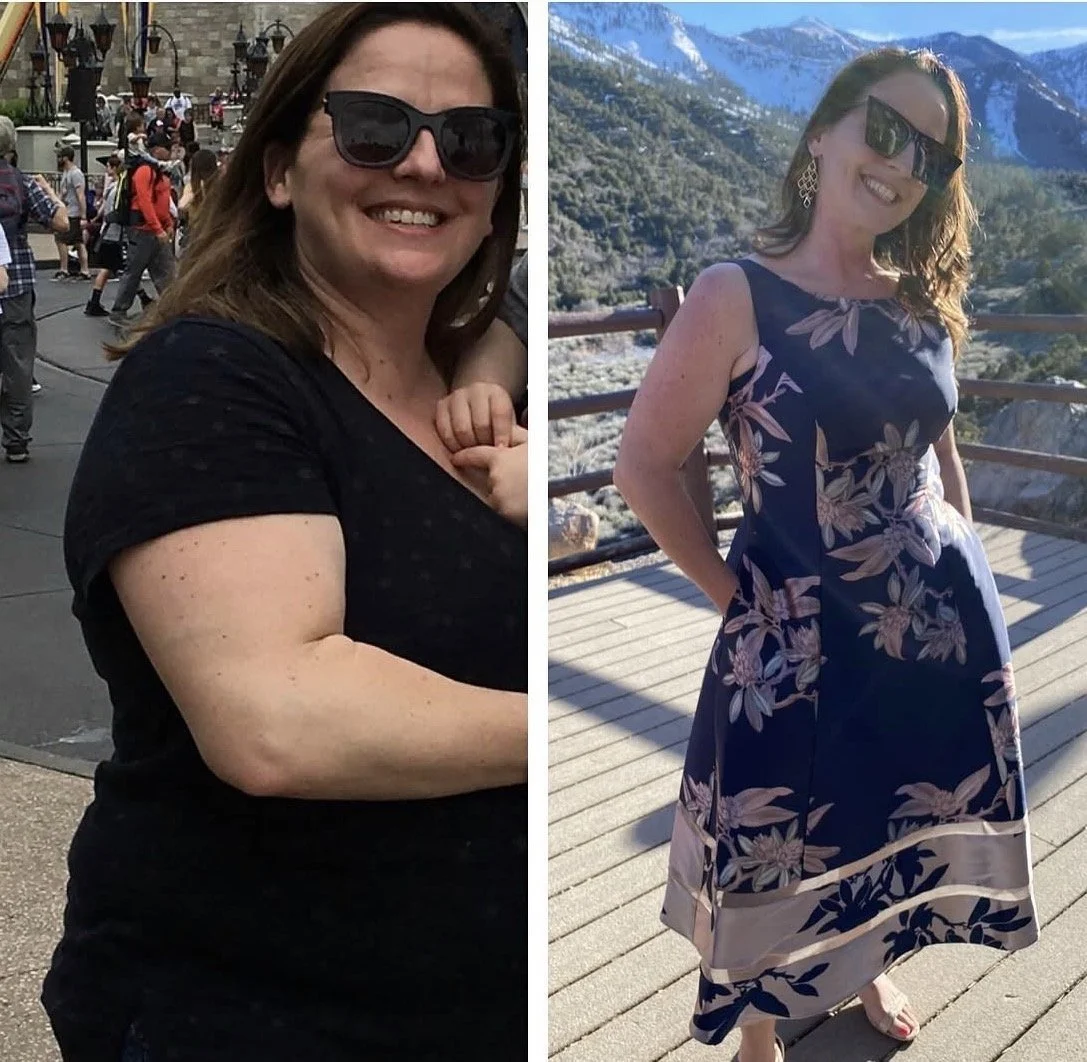
Before and after my GLP-1 journey
How GLP-1 Support Helped Me Move Out of Inflammation, Blood Sugar Chaos, and Weight Loss Resistance
For a long time, I felt like I was doing so many of the “right” things, but my body was not responding.
The weight would not budge.
My body felt inflamed.
My energy was not where I wanted it to be.
My confidence had taken a hit.
And honestly, I felt frustrated because I knew there was more going on than simply needing to “eat less and move more.”
That advice is thrown around constantly, but for many women — especially women in perimenopause, women under chronic stress, women dealing with blood sugar swings, inflammation, sluggish digestion, and hormone shifts — it is not that simple.
My GLP-1 journey was part of what helped me finally move out of that stuck place.
It helped regulate my appetite. It supported my blood sugar. It lowered some of the stress my body was carrying. It helped my body stop fighting me so hard. And yes, it helped the weight start moving.
But here is the part I think gets missed in the GLP-1 conversation:
The medication may help with the weight, but it does not automatically fix your relationship with food, your digestion, your habits, your stress, your nutrient intake, or the deeper reasons your body was struggling in the first place.
That is where the real work begins.
And that is exactly why I now help clients navigate GLP-1 support through a root-cause lens at C&C Holistic Living.
GLP-1 Helped My Body Stop Fighting So Hard
Before GLP-1 support, my body felt like it was stuck in survival mode.
The scale was not moving. I felt inflamed. I did not feel like myself. And I knew my body needed help getting out of that stressed, resistant state.
For me, GLP-1 support helped reduce some of the noise.
My blood sugar felt more regulated. My cravings changed. My appetite shifted. My body felt calmer. And over time, I started to feel less inflamed and more confident.
That confidence piece matters.
Because when you have been doing everything you know to do and your body still feels stuck, it wears on you. It affects how you get dressed. How you show up in pictures. How you feel in your skin. How much energy you have to keep trying.
GLP-1 support helped me create momentum.
But I also knew I could not rely on the medication alone and ignore everything else.
Because that is where a lot of people get into trouble.
I Did Not Treat GLP-1 Like a Free Pass
One of the biggest mistakes I see with GLP-1 medications is that people are told, “You will not be hungry, so you will eat less.”
Okay, technically, yes.
But less food does not automatically mean better nourishment.
Full does not mean fueled.
That sentence is huge.
Just because you are not hungry does not mean your body has enough protein. It does not mean your digestion is working well. It does not mean you are getting enough minerals, fiber, healthy fats, or micronutrients. It does not mean your bowels are moving. It does not mean you are protecting your muscle.
When I used GLP-1 support, I knew I had to do it the right way.
That meant I focused on:
Getting enough protein
Drinking enough water
Moving my body
Strength training and exercising consistently
Supporting digestion
Making sure I was pooping regularly
Paying attention to blood sugar
Eating nutrient-dense foods
Not using the medication as an excuse to under-eat or avoid the deeper work
Because if you use a GLP-1 and barely eat, do not prioritize protein, stop strength training, ignore constipation, and live on random bites of food, you may lose weight — but you may also lose muscle, slow digestion, feel depleted, and create new problems.
And nobody needs a “smaller but exhausted and constipated” version of themselves. That is not the goal.
The Weight May Change, But the Root Problem May Still Be There
This is where we need to have an honest conversation.
GLP-1 medication may help the weight come off. It may help regulate appetite. It may help with blood sugar. It may make it easier to reduce portions and stop constant food noise.
But if the original root causes are still there, what happens when the medication is lowered or removed?
If blood sugar was unstable before, that still needs support.
If digestion was sluggish before, that still needs support.
If stress was driving cravings before, that still needs support.
If you were under-eating protein before, that still needs support.
If your relationship with food was built around restriction, guilt, emotional eating, or all-or-nothing thinking, that still needs support.
If you never built sustainable habits, that still needs support.
The drug may change your appetite, but it does not automatically change your foundation.
This is why I care so much about helping women use this tool wisely.
Because I do not want clients to just lose weight.
I want them to understand their body. I want them to nourish themselves. I want them to protect their metabolism, support their digestion, stabilize blood sugar, build habits, and feel confident in how they are caring for themselves.
What You Lose When You Are Not Hungry Anymore
This part surprised me, and I think it is something more women need to talk about.
When hunger changes, your relationship with food changes too.
For some women, that is a relief. The constant food noise quiets down. Cravings decrease. They feel more in control. They are no longer thinking about snacks, sweets, or what they are going to eat next all day long.
That can feel incredibly freeing.
But it can also reveal things.
When you are not hungry anymore, you may realize how often you ate because you were stressed, tired, bored, lonely, overwhelmed, anxious, or using food as comfort.
You may realize food was your reward at the end of a hard day.
You may realize you do not know how to fuel yourself without hunger cues.
You may realize you skipped meals before and called it discipline.
You may realize you have no idea what “enough” actually feels like.
You may realize full and nourished are not the same thing.
And that is not something to feel ashamed about.
It is something to get curious about.
Your connection to food matters. Your habits matter. Your mindset matters. Your body cues matter.
A GLP-1 can quiet the noise, but it does not teach you how to nourish yourself. That is where support, education, and accountability come in.
Full Does Not Mean Fueled
One of the biggest lessons from my own GLP-1 journey is this:
Just because you feel full does not mean your body has what it needs.
You can feel full after a few bites and still be under-eating protein.
You can feel full and still be constipated.
You can feel full and still be missing key nutrients.
You can feel full and still be losing muscle.
You can feel full and still be stressing your digestive system.
This is why food quality matters so much while using GLP-1 support.
If you are only eating tiny amounts, every bite matters more.
Your body needs protein to protect muscle and support metabolism.
Your body needs fiber and hydration to support bowel movements.
Your body needs minerals for energy, blood sugar, mood, and hydration.
Your body needs healthy fats for hormones and satiety.
Your body needs nutrient-dense foods to actually function.
A smaller appetite should not mean a smaller commitment to nourishment.
It should mean being more intentional.
Digestion Has to Be Supported
GLP-1 medications can slow gastric emptying, which means food may move through the stomach more slowly. For some people, that can contribute to nausea, reflux, bloating, constipation, or feeling overly full.
This is why digestion cannot be an afterthought.
If you already had sluggish digestion, constipation, low stomach acid, poor bile flow, bloating, or food sensitivities before starting a GLP-1, the medication may make those symptoms more noticeable.
This is one reason I was very intentional about pooping regularly.
Yes, we are talking about poop. We have to. Your body does not get a free pass on elimination just because your appetite changed.
Daily bowel movements matter for digestion, hormone clearance, detoxification, bloating, and overall comfort. If you are eating less, drinking less, moving less, or not getting enough fiber and minerals, constipation can become a real issue.
And constipation is not just annoying. It is information.
When I work with clients, I want to know:
Are you pooping daily?
Are you bloated?
Do you feel full quickly?
Are you nauseous?
Are you drinking enough water?
Are you getting enough protein?
Are you getting enough fiber?
Are you moving your body?
Are you chewing your food well?
Are your meals supporting your digestion or working against it?
Because losing weight while feeling miserable is not wellness.
Protein, Water, Movement, and Pooping: The Non-Negotiables
If you are using a GLP-1 or thinking about one, the foundations matter.
Not in a cute “wellness basics” way.
In a “please do not skip this or your body may not be okay” way.
Protein
Protein is essential for muscle maintenance, metabolism, blood sugar stability, immune function, and feeling satisfied. When appetite is low, protein has to be intentional.
You may not feel like eating a full meal, but your body still needs building blocks.
Water
Hydration matters even more when your appetite and intake decrease. Water supports digestion, bowel movements, energy, and overall function.
And sometimes women are not just dehydrated — they are under-mineralized.
This is why I often talk about minerals and electrolytes with clients, especially when they are fatigued, constipated, craving salt, or feeling drained.
Movement
Weight loss without muscle support is not the goal.
Strength training and regular movement help protect muscle, support insulin sensitivity, improve mood, and help your body use the changes from the medication in a healthier way.
You do not need to punish yourself with workouts. But you do need to move your body.
Pooping Regularly
If your digestion slows down, everything feels worse.
Bloating, nausea, reflux, sluggishness, hormone symptoms, and discomfort can all increase when you are not eliminating well.
Daily bowel movements are a major part of doing this well.
Why You Need a Plan Beyond the Medication
Here is the thing I wish more people understood:
GLP-1 support can be a tool.
But it should not be the whole plan.
A tool helps you build something. It does not build the whole house for you.
If the medication helps quiet food noise, use that window to build better habits.
Use it to learn how to eat enough protein.
Use it to stabilize blood sugar.
Use it to strength train.
Use it to support digestion.
Use it to understand emotional eating patterns.
Use it to create routines that can stay with you.
Use it to learn what your body needs.
Because when the medication changes, your foundation is what remains.
If you never build that foundation, you may feel lost when hunger returns, cravings shift, or the scale changes again.
That is where I help.
How I Help Clients on a GLP-1
At C&C Holistic Living, I help women use GLP-1 support in a way that is intentional, nourishing, and rooted in the bigger picture.
We do not just focus on the number on the scale.
We look at:
Protein intake
Meal timing
Blood sugar stability
Digestion and constipation
Hydration and minerals
Movement and strength training
Sleep and stress
Relationship with food
Food quality
Functional labs when appropriate
What happens before, during, and after GLP-1 use
I help clients clear the internet noise and stop guessing.
Because there is a lot of GLP-1 advice out there right now. Some of it is helpful. Some of it is overly simplified. Some of it is basically “eat three bites and hope for the best,” which is a no from me.
My role is to help you understand what your body needs, create a realistic plan, and stay accountable to the habits that protect your health long term.
This Is About More Than Weight Loss
Yes, weight loss matters when your body feels uncomfortable and inflamed.
I know what it feels like to want the weight to move. I know what it feels like to feel stuck. I know what it feels like to want your confidence back.
But this work is about more than weight.
It is about lowering inflammation.
Supporting blood sugar.
Feeling stronger.
Improving digestion.
Protecting muscle.
Building trust with your body.
Learning how to fuel yourself.
Understanding your patterns.
Feeling confident in your choices.
GLP-1 support helped me create a shift.
But the deeper work is what helped me understand how to support my body instead of constantly fighting it.
Final Thoughts
My GLP-1 journey helped me move from feeling inflamed, stuck, and frustrated to feeling more confident, more supported, and more in tune with my body.
But I did not do it by relying on the medication alone.
I did it by focusing on hydration, protein, movement, digestion, regular bowel movements, blood sugar, and nourishment.
And I believe that is what so many women are missing in the GLP-1 conversation.
The medication may help change your weight, but it does not automatically heal your relationship with food. It does not automatically fix digestion. It does not automatically teach you how to fuel your body. It does not automatically build sustainable habits.
That is the work.
And you do not have to figure it out alone.
At C&C Holistic Living, I help women uncover what their body needs before, during, and after GLP-1 support so they can lose weight in a healthier way, protect their body, and create habits that last beyond the medication.
Ready to stop guessing and start supporting your body with a real plan? Book a discovery call and let’s talk about how I can help.
You can also learn more about my services and programs or explore more articles on the C&C Holistic Living blog.
Christa Chioini is the founder of C&C Holistic Living and a Nutritional Therapy Practitioner and Restorative Health Practitioner Level 2 specializing in root-cause nutrition for women in perimenopause and menopause. She helps women connect the dots between weight loss resistance, digestion, blood sugar, fatigue, hormones, and lifestyle patterns through personalized wellness support and functional testing.
Disclaimer: The information shared in this blog is for educational and informational purposes only and is not intended to diagnose, treat, cure, or prevent any disease. This content is not medical advice and should not replace care from your physician or qualified healthcare provider. Always consult with your healthcare provider before making changes to your diet, supplements, medications, exercise routine, or health plan, especially if you have a medical condition, are pregnant or nursing, or are taking prescription medications.
