
Perimenopause Belly Fat: Why It Happens and What Actually Helps
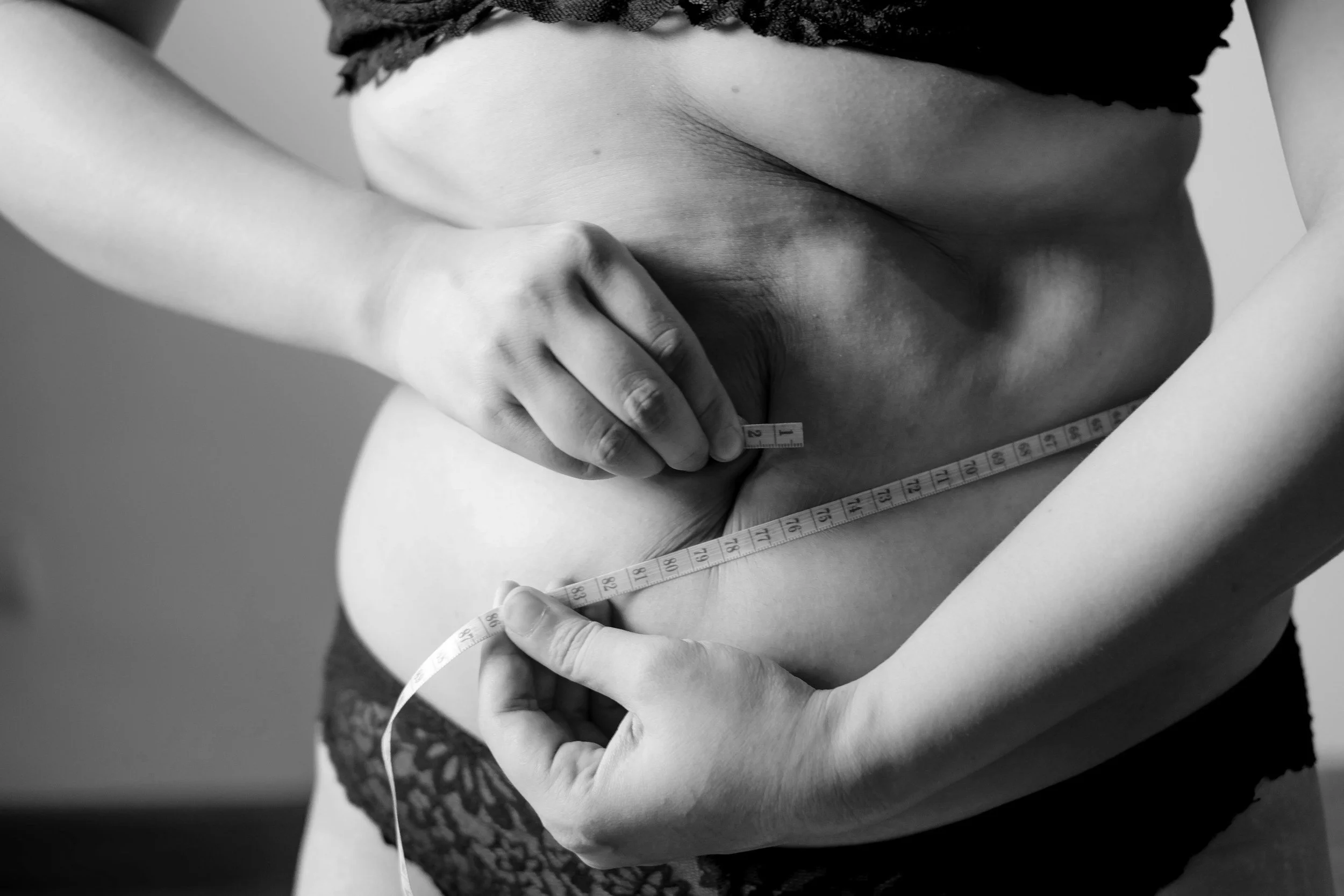
Why Your Midsection Changes in Perimenopause — and Why It’s Not Just About Calories
If your body suddenly feels like it changed the rules without giving you a meeting invite, welcome to perimenopause.
One of the most common frustrations I hear from women is this:
“I’m doing what used to work, but now my belly keeps getting bigger.”
You may be eating healthy, walking, working out, drinking water, cutting back on sugar, and still noticing more weight around your midsection. Your jeans feel tighter. Your waist feels thicker. You feel puffier, more inflamed, and less like yourself.
And the advice you usually hear is painfully basic:
Eat less.
Move more.
Track your calories.
Try harder.
But perimenopause belly fat is rarely that simple.
At C&C Holistic Living, I help women in perimenopause look deeper at the root causes behind stubborn weight, bloating, fatigue, blood sugar swings, and hormone symptoms so they can stop blaming themselves and start understanding what their body is asking for.
Why Belly Fat Can Increase During Perimenopause
Perimenopause is the transition leading up to menopause, and it can bring major shifts in estrogen, progesterone, insulin sensitivity, cortisol, sleep, digestion, and muscle mass.
That means your metabolism may not respond the same way it did in your 20s or 30s.
Belly fat during perimenopause can be connected to:
Blood sugar instability
Insulin resistance
Poor sleep
Chronic stress
Low protein intake
Loss of muscle mass
Sluggish digestion
Constipation
Inflammation
Alcohol tolerance changes
Under-eating during the day
Over-exercising or under-recovering
Hormone shifts
So no, your body is not broken.
But it may need a different strategy.
Blood Sugar Is a Huge Piece of the Belly Fat Puzzle
One of the biggest patterns I see with women struggling with midsection weight is blood sugar instability.
You may not have diabetes. Your doctor may not be worried. Your labs may even be “normal.” But blood sugar can still be swinging throughout the day.
Blood sugar swings can show up as:
Cravings
Afternoon crashes
Irritability
Anxiety
Waking at 3 a.m.
Hot flashes
Belly weight
Needing caffeine to function
Feeling shaky between meals
Constant snacking
When blood sugar is unstable, your body can stay in a more stressed state. That can make it harder to lose weight, especially around the belly.
This is why I talk so much about meal structure with clients. A “healthy” meal is not always a blood-sugar-supportive meal.
A salad with very little protein may be healthy, but it may not be enough. A smoothie with fruit and almond milk may look clean, but if it does not have enough protein, fat, and fiber, it may leave you hungry, craving, or crashing later.
If you want to learn more about how I work with blood sugar, digestion, and hormone symptoms, visit my Services page.
Stress Can Keep Your Body in Storage Mode
Perimenopause often happens during one of the busiest seasons of a woman’s life.
You may be working, parenting, managing a household, caring for aging parents, navigating marriage, dealing with stress, and trying to squeeze your own health into the leftover minutes of the day.
That constant stress can affect cortisol, blood sugar, digestion, sleep, cravings, and inflammation.
And here is the part nobody wants to hear but everyone needs to know:
You cannot hate your body into healing.
If your body is already stressed, skipping meals, over-exercising, under-sleeping, and running on coffee may not help. In fact, it may make your body feel even less safe.
This is not about doing less forever. It is about giving your body the support it needs so it can respond again.
Muscle Matters More After 40
Muscle is one of the most important pieces of the weight loss conversation after 40.
Muscle supports metabolism, blood sugar regulation, strength, bone health, and healthy aging.
But during perimenopause, women can begin losing muscle more easily, especially if they are not eating enough protein or strength training consistently.
This is one reason I encourage clients to stop chasing smaller and start building stronger.
If you are losing weight by under-eating, skipping protein, or doing only cardio, you may lose muscle along with fat. That can slow your metabolism and make long-term weight management harder.
Protein and strength training are not optional little wellness extras. They are foundational.
Digestion Can Affect Belly Weight Too
Bloating and belly fat are not the same thing, but they often overlap.
Many women feel like their belly is bigger because they are dealing with constipation, gas, sluggish digestion, food sensitivities, poor stomach acid, or gut inflammation.
If you are not pooping daily, your belly may feel heavier, tighter, and more uncomfortable.
Daily elimination matters for digestion, hormone clearance, detoxification, and bloating.
At C&C Holistic Living, I do not just ask what you eat. I ask how your body responds.
Are you bloated after meals?
Are you constipated?
Do you burp or reflux?
Do you feel full quickly?
Do certain foods trigger symptoms?
Do you crave sugar?
Do you feel tired after eating?
Those answers matter because they help us connect the dots.
You can read more root-cause articles on the C&C Holistic Living blog.
What Actually Helps Perimenopause Belly Fat?
There is no magic trick, and honestly, that is probably a good thing. Most magic tricks on the internet are just stress with better branding.
What helps is building a foundation your body can actually respond to.
Start with these areas:
Eat enough protein at meals.
Build balanced meals with protein, fat, fiber, and whole-food carbohydrates.
Stop skipping meals and then wondering why cravings hit at night.
Strength train consistently.
Walk regularly.
Support digestion and daily bowel movements.
Prioritize sleep quality.
Reduce alcohol if it worsens sleep, hot flashes, or cravings.
Drink enough water and support minerals.
Manage stress in realistic ways.
Look deeper with functional testing when symptoms are not improving.
This is not about perfection. It is about consistency.
Why Accountability Matters
Most women do not need more information.
They need help figuring out what information actually applies to their body.
The internet will tell you to fast, eat more carbs, eat fewer carbs, cut out gluten, take berberine, lift heavy, walk more, do cortisol workouts, eat 30 plants a week, stop drinking coffee, and somehow also meal prep like you do not have a life.
That is the internet soup.
My job is to help clients clear the noise.
When I work with women, we look at symptoms, food patterns, digestion, blood sugar, sleep, stress, lifestyle, and labs when appropriate. Then we create a realistic plan and adjust it based on how the body responds.
Because knowing what to do is one thing.
Actually doing it consistently while living a real life is another.
How C&C Holistic Living Can Help
You are not a template, and your plan should not look like everyone else’s. At C&C Holistic Living, we look at your health history, symptoms, food patterns, digestion, stress, sleep, blood sugar, and labs when appropriate to better understand why your body may be holding onto weight.
For perimenopause belly fat, the Ultimate Wellness Package may be the best fit if you feel stuck and need deeper support. Functional bloodwork, Hair and Mineral testing, GI-MAP stool testing, or MRT food sensitivity testing may also help identify patterns related to blood sugar, inflammation, digestion, minerals, and food triggers.
The goal is not another cookie-cutter weight loss plan. It is a personalized strategy that helps your body feel safe, supported, and ready to respond.
Final Thoughts
Perimenopause belly fat is not just a willpower problem.
It can be connected to blood sugar, stress, sleep, digestion, inflammation, muscle loss, hormone shifts, and under-fueling.
Your body is not failing you. It is communicating with you.
At C&C Holistic Living, I help women uncover the root causes behind stubborn weight, bloating, fatigue, digestion issues, and hormone symptoms so they can stop guessing and start feeling more confident in their body again.
Ready to stop fighting your body and start understanding it? Book a discovery call and let’s look at what your body is actually trying to tell you.
Christa Chioini is the founder of C&C Holistic Living and a Nutritional Therapy Practitioner and Restorative Health Practitioner Level 2 specializing in root-cause nutrition for women in perimenopause and menopause. She helps women connect the dots between weight loss resistance, digestion, blood sugar, fatigue, hormones, and lifestyle patterns through personalized wellness support and functional testing.
Disclaimer: The information shared in this blog is for educational and informational purposes only and is not intended to diagnose, treat, cure, or prevent any disease. This content is not medical advice and should not replace care from your physician or qualified healthcare provider. Always consult with your healthcare provider before making changes to your diet, supplements, medications, exercise routine, or health plan, especially if you have a medical condition, are pregnant or nursing, or are taking prescription medications.
